Learn the Useful Plants that are in Season Right Now in the Southern US!
Immediately Start Finding New Plants to Forage This Summer

Turn a Summer Stroll Into a Basket of Wild Edibles and Natural Remedies…
- Get a Jumpstart on Summer Foraging with a Detailed Rundown on the Useful Plants in Season Right Now, Their Key Identification Features, and a Breakdown of Their Edible & Medicinal Uses
- Learn Some of Our Local Wild Fruits You Can Find this Time of Year!
- Edible Greens of Summer: Nutrient-Dense Wild Vegetables of the Warm Season (One of them has more omega-3 fatty acids than almost any vegetable ever tested!)
- The South's Wild "Lemonade" Plant that Puts Store-Bought to Shame! (This one is a yearly tradition in our house)
- 2 Top Herbal Anti-Virals for Cold & Flu Season (Get them now while they're in season!)
- Useful Mints of the Summer Season: 3 Mint-Family Plants that Are Easy to Find in July
- Get Prepared for Fall Allergy Season with 3 of My Favorite Herbs for Itchy Eyes & Sinuses, Runny Nose, and Congestion
- Medicinal Uses and Preparation of Wild Lettuce, A Pain Relieving and Sleep Inducing Plant
- How to Identify the South's Wild Passionfruit Vines (Yes, passionfruit actually grows wild in our region!)
- Learn How to Prepare Each Plant Into a Medicine Using Teas and Tinctures (Including Dosage Information for Each Plant).
- ⭐BONUS⭐ Foraging Chanterelles: A special segment on identifying one of the South's most prized wild mushrooms (that are found during the summer months).

Included With This Workshop:
Downloadable & Printable Plant Profiles to Make Finding and Confidently Identifying Each Plant Covered A Breeze!
Once this workshop is over you'll want a quick way to reference everything you just learned. My 1-Page Plant Profiles make it easy to commit each plant to memory and confidently identify them once you find them in the field!

A Special Segment On Identifying Wild Chanterelles, One of the South's Most Prized Wild Mushrooms (Found In the Summertime)
Chanterelles are a truly gourmet mushroom that are common and easy to find in forests across the South(and beyond). In this workshop I'll show you 6 key characteristics to make identifying them a breeze!
We'll look at two common varieties found in our area, one orange and one red. These brightly colored mushrooms stand out from a distance and are easy to identify- perfect for beginners! (Fun Fact: Not only do they taste great, they actually smell like peaches!)

Check Out the Map Below to See the Exact Region This Workshop Covers...

To ensure that each student is able to find the plants we talk about, this workshop covers a specific region of the Southern U.S. known as the Coastal Plain.
Plant life in this region is similar from end to end, so that students anywhere in the orange area on the map will easily be able to locate plants we cover in their immediate area!
As you start to move outside of this region, plant life slowly starts to change. If you live to the north of this region, most of the plants we discuss will still grow in your area, as plant life is surprisingly similar throughout the whole Eastern U.S.
If you live west of the orange area in central Oklahoma or central Texas, or if you live in the southern tip of Florida, there will still be some overlap, but keep in mind that plant life changes more drastically in those areas.
Meet Your Instructor
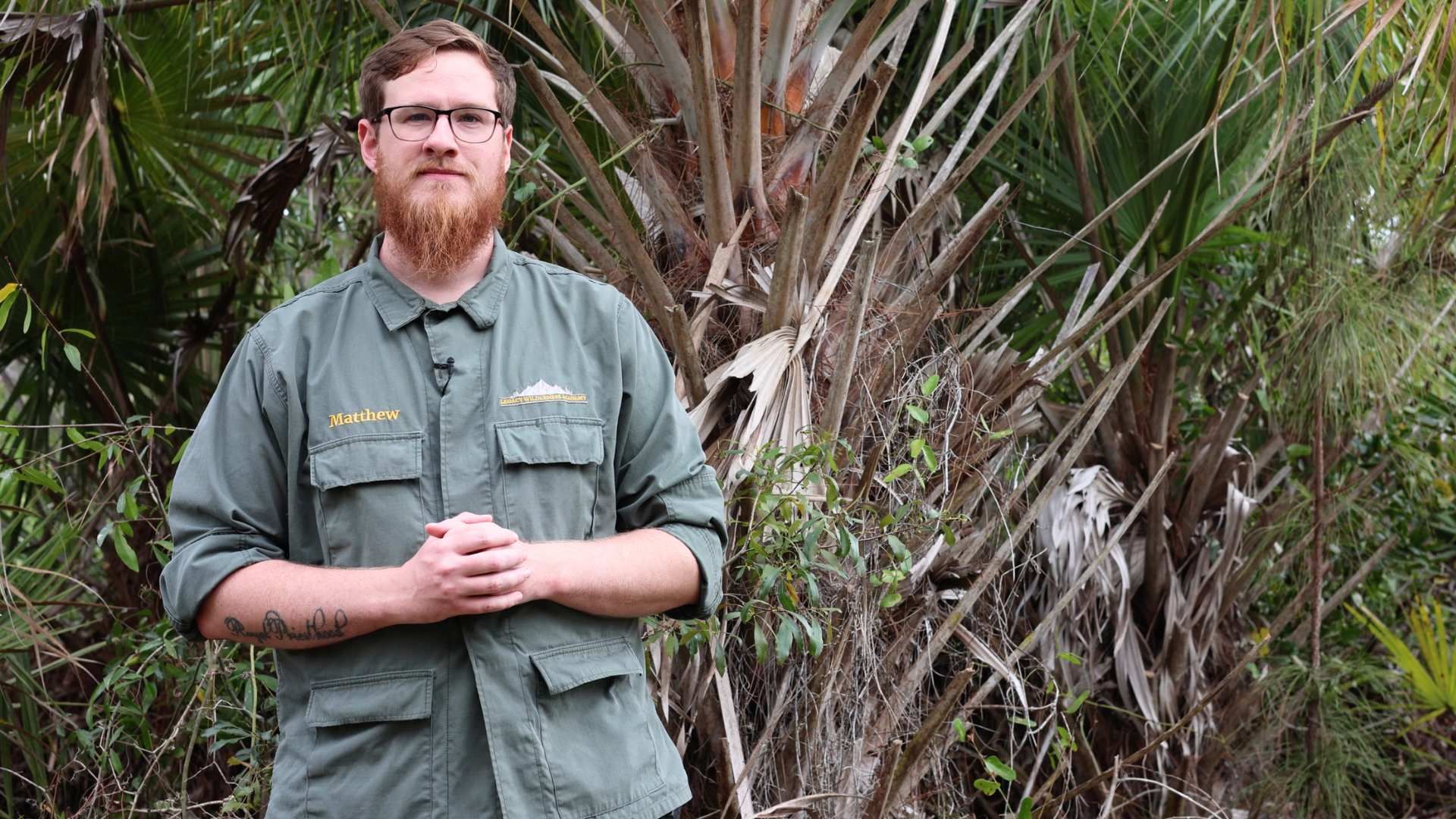
Matthew Hunter is the creator of multiple outdoor education courses including Fundamentals of Wilderness Survival, Foraging 101, Medicinal Plants of the Southeast, and The Southerner's Guide to Foraging. He’s been foraging for over a decade and has filmed over 150 videos on edible wild plants and outdoor skills.
Matthew lives with his wife, daughter, and son in West Monroe, Louisiana.
Frequently Asked Questions
How Long Will I Have Access to the Workshop?
Students will have access to this workshop for a full year.
What If I Don't Live in the Orange Area on the Map?
Many of the plants covered in this workshop grow throughout the whole Eastern U.S., not just the area shown on the map. If you live north of the orange zone, most of the plants we cover will still grow in your area. If you live west of the orange area in central Oklahoma or central Texas, or if you live in the southern tip of Florida, there will still be some overlap, but keep in mind that plant life changes more drastically in those areas.
© 2026 Legacy Wilderness Academy LLC
By visiting this page, you agree to terms and conditions & privacy policy.